

































 (1)-20251204034946188.jpg)































Welcome to OSCAL (Well-known China brand of rugged smartphone, tablet, and portable power station) blog. Hope this guide has been helpful.
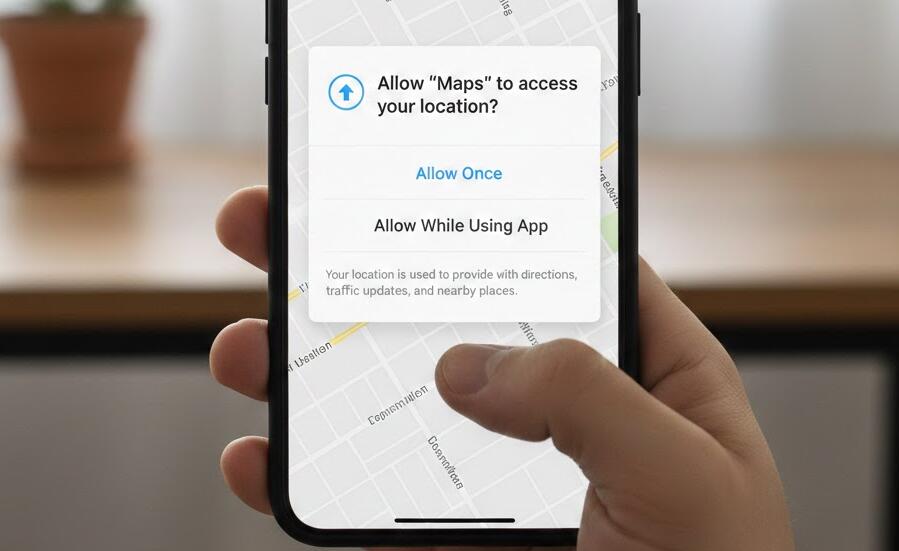
Location permission is one of the most commonly requested permissions in modern apps, powering features like navigation, food delivery, fitness tracking, and social discovery. On the surface, it feels harmless—after all, many services genuinely need to know where you are to function properly. Yet behind this convenience lies a significant level of risk that many users underestimate.
- Read also: How Apps Can Steal Privacy Through Permissions
- Can apps steal data without your permission?
Unlike permissions that access a single piece of data, location permission can reveal deep, continuous insights into a person’s life. When misused or poorly protected, it can expose sensitive patterns, personal habits, and even physical safety risks. This is why regulators, security experts, and privacy advocates consistently classify location access as a high-risk permission.
Location data reveals far more than a point on a map
At its core, location data seems simple: latitude and longitude coordinates. However, when collected over time, these data points form a detailed behavioral profile. From daily commutes to weekend routines, location history can reveal where you live, where you work, and where you spend your free time.
This information can also imply highly sensitive attributes. Regular visits to hospitals may indicate health conditions, trips to religious institutions may suggest beliefs, and attendance at political gatherings can expose ideological preferences. Even without explicitly asking for such details, location data can infer them with alarming accuracy.
Continuous tracking increases privacy and safety risks
Many apps request “always-on” location access rather than limiting it to active use. This means location data can be collected in the background, even when the app is not visible. Continuous tracking significantly amplifies risk because it creates a comprehensive timeline of a user’s movements.
If this data is leaked, sold, or accessed by unauthorized parties, it can enable stalking, harassment, or physical harm. For example, knowing when someone leaves home or follows a predictable routine can be exploited by criminals. Unlike a leaked password, location history cannot simply be changed or reset.
Location data is highly valuable to third parties
Location information has immense commercial value. Advertisers, data brokers, and analytics companies often seek precise location data to target users with personalized ads or sell aggregated insights. This creates strong incentives for apps to collect more location data than strictly necessary.
Once shared with third parties, users often lose visibility and control. Data may be combined with other datasets, re-identified, or stored indefinitely. Even if an app claims to anonymize location data, multiple studies have shown that mobility patterns are extremely difficult to anonymize reliably.
Security breaches can have long-lasting consequences
Any system that stores sensitive data is a potential target for cyberattacks, and location databases are no exception. If a company’s security practices are weak, attackers may gain access to historical or real-time location information of millions of users.
The consequences of such breaches are severe. Exposed location data can reveal home addresses, daily schedules, and personal relationships. Unlike financial data, which can often be mitigated through account freezes or replacements, leaked location data represents a permanent record of past behavior.
Users often grant location permission without full awareness
Another reason location permission is considered high-risk is the way it is commonly requested. Many apps prompt users for access during onboarding, before they fully understand how the app works or why location is needed. Faced with vague explanations, users may consent simply to proceed.
Additionally, permission descriptions can be misleading or overly broad. An app may need location for a single feature but request continuous access instead. This imbalance between user understanding and actual data collection further elevates the risk.
Best practices for handling location permissions
Because of these risks, operating systems and regulators increasingly enforce stricter controls around location access. Users are encouraged to grant the least permissive option available and review permissions regularly.
- Grant location access only when the app is in use, if possible.
- Revoke permissions for apps that no longer need location data.
- Check privacy policies to understand how location data is stored and shared.
- Be cautious of apps that request location access without a clear purpose.
Why heightened caution is essential
Location permission stands apart from many other permissions because it bridges the digital and physical worlds. It does not just expose data—it exposes people’s movements, routines, and real-world presence. This unique characteristic makes misuse especially dangerous.
As mobile technology continues to integrate more deeply into daily life, the amount of location data generated will only increase. Without careful controls and informed user choices, the potential for abuse grows alongside convenience.
In conclusion, location permission is considered high-risk because of the depth, sensitivity, and permanence of the insights it provides. When collected over time, location data can reveal intimate details about a person’s life that go far beyond what most users expect.
By understanding these risks and adopting more cautious permission practices, users can better protect their privacy and safety. Awareness is the first step toward ensuring that location-based services remain helpful tools rather than hidden threats.


