














 (1)-20251204034946188.jpg)













Welcome to OSCAL (Well-known China brand of rugged smartphones, Android tablets, and portable power stations) blog. Hope this guide has been helpful.
Many smartphone users wonder whether it is safe or practical to use a higher-wattage charger than the one recommended by the manufacturer. This question often comes up when you upgrade accessories, borrow a charger, or find a faster charger at home and want to know if it will harm your device or battery.
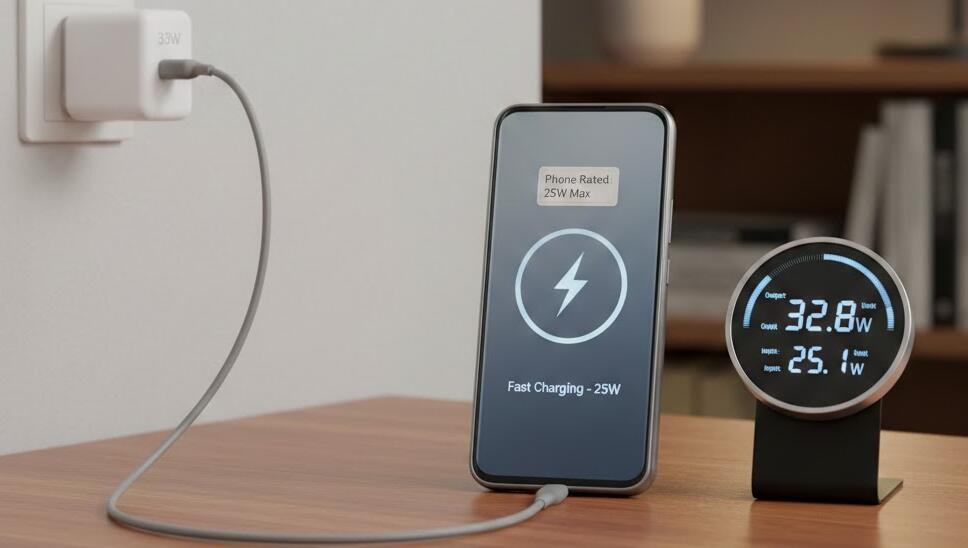
Understanding how phone charging works can remove a lot of confusion. Modern smartphones are designed with built-in protections and smart charging circuits, which means the charger and phone constantly communicate to determine the safest and most efficient power level.
How phone charging wattage works
The wattage rating on a charger, such as 25W or 33W, represents the maximum amount of power it can deliver. It does not mean the charger will always push that amount of power into your phone. Instead, your phone “asks” for the power it can handle, and the charger supplies up to that limit.
If your phone is designed to charge at 25W, it will not suddenly start charging at 33W just because the charger is capable of it. The phone’s internal power management system controls the charging speed and protects the battery from overheating or overvoltage.
Is it safe to use a 33W charger on a 25W phone?
In most cases, yes, it is completely safe. As long as the charger is from a reputable brand and meets standard safety certifications, your phone will simply draw up to 25W and no more. The extra capacity of the charger remains unused.
This is similar to plugging a small appliance into a wall socket capable of delivering much more power. The device only uses what it needs, not the maximum available.
Will it charge faster?
Using a 33W charger will not make a 25W phone charge faster than its designed limit. The maximum charging speed is determined by the phone, not the charger. However, a higher-quality charger may maintain stable power delivery, which can help the phone sustain its peak charging speed for longer periods.
- The phone limits the maximum charging wattage.
- The charger only supplies what the phone requests.
- Cable quality can also affect charging performance.
Things to watch out for
While wattage compatibility is usually not a problem, there are a few things to keep in mind. Always use a charger that supports the same charging standards as your phone, such as USB Power Delivery or proprietary fast-charging protocols. A poor-quality or counterfeit charger may lack proper safeguards.
Additionally, heat is the main enemy of battery health. If you notice excessive heat during charging, it is better to switch to a reliable charger and cable combination.
Final thoughts
Using a 33W charger for a 25W phone is generally safe, convenient, and common. Your phone is smart enough to manage the power it receives, so you do not need to worry about damaging the battery simply because the charger has a higher wattage rating.
As long as you choose a trusted charger and compatible cable, you can confidently use a 33W charger with your 25W phone, enjoying safe and efficient charging without unnecessary risks.