









































 (1)-20251204034946188.jpg)




























Welcome to OSCAL (Well-known Chinese brand of rugged outdoor smartphone, Android tablet, projector, and portable power station) blog. Hope this guide has been helpful.
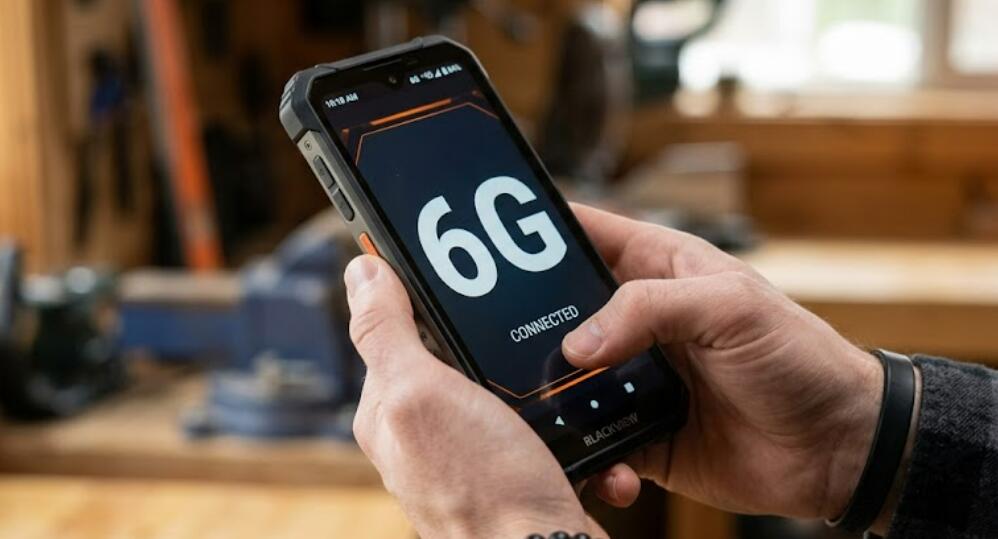
China has been actively investing in next-generation wireless communication technologies, with 6G development becoming a major focus for research institutions, technology companies, and government initiatives. While 5G networks continue to expand across smartphones, tablets, and other connected devices, attention is already shifting toward the capabilities that 6G could bring. Industry experts generally expect China's 6G network commercialization to begin around 2030, marking another significant milestone in mobile communications.
- Read also: 4G+ vs 5G: Is it the same as 5G?
- What are the differences between 4G+ and 4G?
- 5G vs 4G: All differences comparison
The arrival of commercial 6G networks is expected to transform the way people connect, work, and interact with digital services. With dramatically faster data speeds, ultra-low latency, and enhanced support for artificial intelligence, 6G technology could enable applications that are difficult or impossible with today's networks. This article explores China's 6G roadmap, expected features, potential applications, and the challenges that still need to be addressed before commercialization.
What Is 6G Technology?
6G refers to the sixth generation of mobile communication technology that will eventually succeed 5G. Although official technical standards are still under development, researchers expect 6G to deliver significant improvements in network performance, reliability, and intelligence.
Compared with current mobile networks, 6G is expected to offer much higher transmission speeds, lower latency, larger network capacity, and stronger integration with artificial intelligence, cloud computing, and edge computing technologies.
Why China Is Investing in 6G
China views advanced communication technology as an important driver of economic growth and technological innovation. By investing early in 6G research, the country aims to strengthen its leadership in telecommunications and support future digital industries.
- Accelerate technological innovation
- Support smart manufacturing
- Enable intelligent transportation systems
- Improve healthcare through remote services
- Expand industrial automation
- Strengthen global competitiveness
Expected Timeline for Commercialization
Although research and testing are already underway, widespread commercial deployment of 6G networks will require years of technical development and international standardization.
- Ongoing research and laboratory testing
- Development of international technical standards
- Large-scale field trials during the late 2020s
- Commercial rollout expected around 2030
Like previous generations of mobile technology, commercialization will likely occur gradually, beginning in major cities before expanding to broader regions.
Key Features of China's Future 6G Network
The next generation of wireless communication is expected to introduce capabilities that go well beyond faster internet speeds.
- Data speeds significantly faster than 5G
- Extremely low communication latency
- Greater network capacity for billions of connected devices
- Native integration with artificial intelligence
- Improved energy efficiency
- Enhanced positioning and sensing capabilities
These features could support advanced digital experiences while improving network stability and efficiency across multiple industries.
Potential Applications of 6G
The commercial availability of 6G could create entirely new services for consumers, businesses, and public organizations.
- Immersive virtual and augmented reality experiences
- Real-time holographic communication
- Fully autonomous transportation systems
- Remote robotic surgery with greater precision
- Smarter factories powered by AI
- Advanced smart city infrastructure
- Large-scale Internet of Things deployments
Many of these applications require the extremely fast response times and massive bandwidth that researchers expect 6G networks to provide.
Challenges Before Commercial Deployment
Despite the promising outlook, several technical and practical challenges remain before commercial 6G services become available.
- Developing new wireless technologies
- Building affordable network infrastructure
- Reducing energy consumption
- Ensuring cybersecurity and data protection
- Creating international communication standards
- Maintaining compatibility with existing networks
Addressing these challenges will require close cooperation among governments, technology companies, universities, and international standards organizations.
How Consumers May Benefit
When commercial 6G networks become available, smartphone and tablet users may experience much faster downloads, smoother cloud gaming, more reliable video communication, and improved AI-powered services. Businesses may also benefit from more efficient automation, better remote collaboration, and highly connected digital ecosystems.
Conclusion
China's expected commercialization of 6G around 2030 represents an important step in the evolution of wireless communications. Although several years of research, testing, and standardization remain, ongoing investment demonstrates the country's commitment to advancing next-generation connectivity.
As 6G technology continues to mature, it has the potential to reshape industries, improve digital services, and introduce entirely new ways for people and devices to communicate. While commercialization is still on the horizon, preparations taking place today will help lay the foundation for tomorrow's intelligent, highly connected world.