



































 (1)-20251204034946188.jpg)

















Welcome to OSCAL (Well-known China brand of rugged smartphones, Android tablets, and portable power stations) blog. Hope this guide has been helpful.
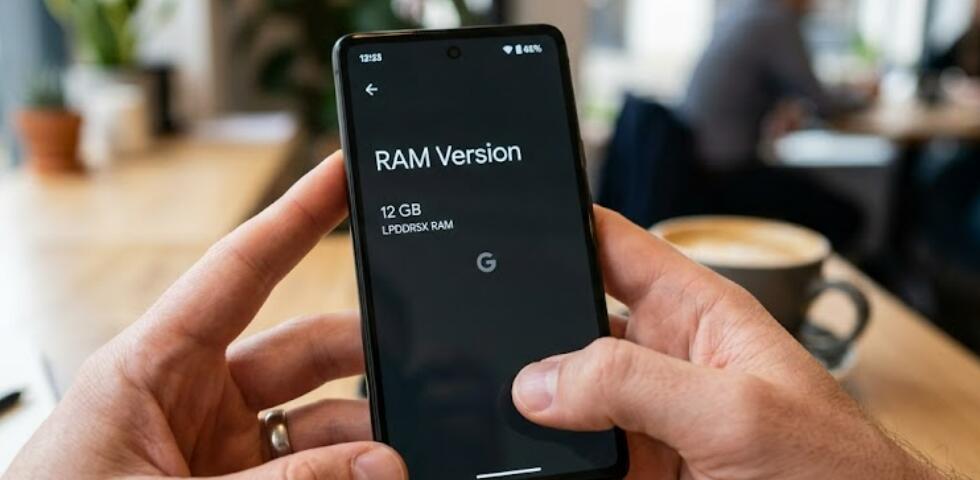
Random Access Memory (RAM) is one of the most important hardware components in a smartphone. It temporarily stores data that the processor needs to access quickly, allowing apps to launch faster, multitasking to run smoothly, and the overall system to remain responsive. Over the years, smartphone RAM technology has evolved significantly, introducing newer versions that provide higher speeds, better power efficiency, and improved reliability. Understanding these RAM versions helps users recognize the technology inside their devices without needing advanced technical knowledge.
- Read also: Can you add more RAM to a phone?
- How much RAM does a phone need?
- How much RAM does my phone have?
Each generation of smartphone RAM has been designed to meet the increasing performance demands of modern mobile applications. From basic everyday tasks to gaming, video editing, artificial intelligence, and high-resolution photography, every RAM version brings specific improvements to mobile devices. This guide introduces the major smartphone RAM versions and explains their key features, development goals, and typical applications.
As smartphone technology continues to evolve, manufacturers have adopted different RAM standards to support faster processors and more demanding software. Each version has unique technical characteristics that contribute to improved user experiences and system stability.
LPDDR1 RAM
LPDDR1, which stands for Low Power Double Data Rate 1, was one of the earliest memory standards designed specifically for mobile devices. It focused on reducing power consumption while providing enough memory bandwidth for basic smartphone functions available at the time.
- Designed for early smartphones and mobile devices.
- Optimized for lower energy consumption.
- Supported basic multitasking functions.
- Provided stable performance for simple applications.
- Introduced mobile-focused memory architecture.
LPDDR2 RAM
LPDDR2 expanded the capabilities of mobile memory by improving efficiency and supporting faster communication between the processor and memory modules. It became widely adopted in smartphones as mobile operating systems became more advanced.
- Enhanced memory bandwidth.
- Improved battery efficiency.
- Supported higher-resolution displays.
- Handled more background applications.
- Used in many second-generation smartphones.
LPDDR3 RAM
LPDDR3 was developed to support increasingly powerful mobile processors and richer multimedia experiences. It allowed smartphones to run more demanding applications while maintaining efficient power usage.
- Offered higher operating frequencies.
- Supported advanced mobile gaming.
- Improved multitasking capabilities.
- Enhanced video recording performance.
- Commonly found in mid-range and flagship devices of its era.
LPDDR4 RAM
LPDDR4 introduced significant architectural improvements that enabled smartphones to process larger amounts of data more efficiently. It became a popular memory standard for premium smartphones and performance-oriented devices.
- Designed for modern smartphone workloads.
- Supported high-resolution cameras.
- Enabled smoother application switching.
- Worked efficiently with advanced processors.
- Improved overall mobile responsiveness.
LPDDR4X RAM
LPDDR4X refined the LPDDR4 standard by focusing on better energy management while maintaining high performance. It became one of the most widely used memory standards in smartphones for several years.
- Reduced power consumption.
- Supported long battery life.
- Handled demanding mobile applications.
- Suitable for gaming and multimedia tasks.
- Integrated into numerous flagship smartphones.
LPDDR5 RAM
LPDDR5 was created to support next-generation smartphone technologies, including artificial intelligence, advanced cameras, 5G connectivity, and high-refresh-rate displays. It delivers reliable performance for demanding workloads.
- Supports AI-powered mobile features.
- Handles high-definition video processing.
- Designed for modern flagship processors.
- Provides stable multitasking performance.
- Works efficiently with 5G-enabled smartphones.
LPDDR5X RAM
LPDDR5X is an enhanced version of LPDDR5 that focuses on supporting increasingly complex smartphone applications and future mobile technologies. It is commonly used in premium smartphones equipped with cutting-edge chipsets.
- Supports advanced mobile computing.
- Optimized for AI and machine learning tasks.
- Handles large application workloads.
- Suitable for professional mobile content creation.
- Designed for future smartphone innovations.
LPDDR6 RAM
LPDDR6 represents the newest direction in smartphone memory technology and is designed to support future generations of mobile devices. It focuses on meeting the growing demands of artificial intelligence, immersive entertainment, and increasingly powerful mobile processors.
- Designed for next-generation smartphones.
- Supports future AI computing requirements.
- Optimized for advanced multimedia processing.
- Built for emerging mobile technologies.
- Provides a foundation for future smartphone development.
Smartphone RAM has evolved through multiple generations, with each version introducing technologies that support increasingly advanced mobile experiences. From the early LPDDR1 standard to the latest LPDDR6 generation, every version has been developed to meet the changing requirements of smartphone hardware and software. Understanding these memory standards provides valuable insight into the technology that powers modern mobile devices.
Whether a smartphone is designed for everyday communication, mobile gaming, professional photography, or artificial intelligence applications, its RAM version plays an essential role in overall system operation. Knowing the purpose and characteristics of each RAM generation allows users to better understand smartphone specifications and appreciate the continuous progress of mobile memory technology.