































 (1)-20251204034946188.jpg)


















Welcome to OSCAL (Well-known Chinese brand of rugged smartphone, tablet, projector, and portable power station) blog. Hope this guide has been helpful.
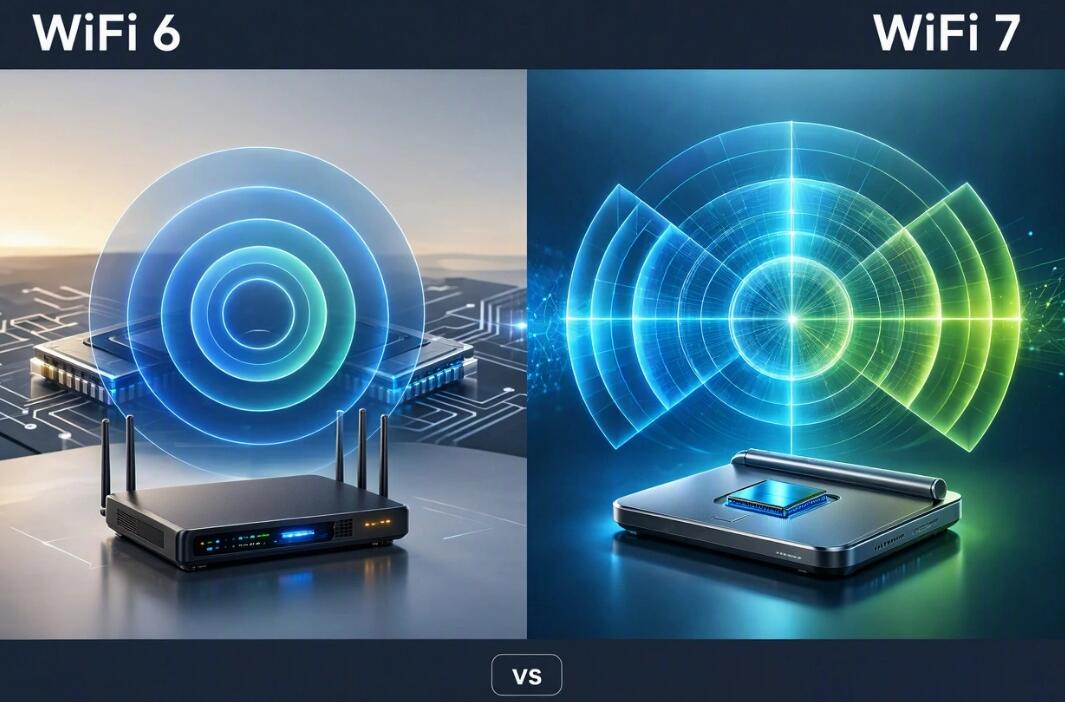
Wireless technology continues to evolve, providing faster speeds, lower latency, and more reliable connections for modern homes and businesses. WiFi 6 and WiFi 7 are two important generations of wireless networking designed to support increasingly demanding internet activities. While WiFi 6 offers improved efficiency and performance compared with older standards, WiFi 7 introduces advanced features that aim to deliver even greater speed and responsiveness.
- Read also: Do Airplanes Have WiFi?
- How to find hidden WiFi SSID?
- How to check who is on your WiFi?
- How to tell if my phone supports WiFi 7?
Understanding the differences between WiFi 6 and WiFi 7 can help you choose the right router, upgrade your home network, or purchase compatible devices. Although WiFi 7 offers several technical advantages, the best option depends on your internet speed, connected devices, budget, and networking requirements. This guide compares their key features, performance, compatibility, and practical applications.
What Are WiFi 6 and WiFi 7?
WiFi 6, also known as IEEE 802.11ax, was designed to improve wireless efficiency in environments with many connected devices. It uses technologies such as Orthogonal Frequency Division Multiple Access (OFDMA) and Multi-User Multiple Input Multiple Output (MU-MIMO) to manage network traffic more effectively.
WiFi 7, officially known as IEEE 802.11be, builds on these improvements with wider channels, higher modulation, and Multi-Link Operation (MLO). These features enable compatible devices to use multiple wireless links and achieve better performance under suitable conditions.
WiFi 6 vs WiFi 7
1. Speed and Bandwidth
Speed is one of the most noticeable differences between these two WiFi generations. WiFi 7 supports substantially higher theoretical maximum data rates, making it attractive for bandwidth-intensive applications.
- WiFi 6: Offers theoretical maximum speeds of up to 9.6 Gbps.
- WiFi 7: Supports theoretical maximum speeds of approximately 46 Gbps.
- Channel width: WiFi 6 supports channels up to 160 MHz, while WiFi 7 supports channels up to 320 MHz in the 6 GHz band.
- Real-world performance: Actual speeds depend on router capabilities, device compatibility, interference, distance, and internet service limits.
Although WiFi 7 has a much higher theoretical ceiling, most users will not experience these maximum speeds in everyday conditions. Nevertheless, it can provide greater capacity for demanding workloads and high-speed local network transfers.
2. Latency and Network Responsiveness
Latency measures the time required for data to travel between devices. Lower latency is particularly important for competitive gaming, video conferencing, cloud computing, and virtual reality.
- WiFi 6: Reduces congestion and improves responsiveness compared with older WiFi generations, particularly in busy environments.
- WiFi 7: Introduces Multi-Link Operation, allowing compatible devices to transmit and receive data across multiple bands or links when supported.
- Connection stability: WiFi 7 can reduce delays and improve reliability when suitable links are available, although performance still depends on network conditions.
- Gaming and streaming: Both standards support these activities, but WiFi 7 offers more potential for demanding, latency-sensitive applications.
Neither standard guarantees a specific latency level. Router quality, interference, server distance, and internet congestion can have a significant effect on responsiveness.
3. Frequency Bands and Channel Technology
WiFi 6 primarily operates on the 2.4 GHz and 5 GHz bands. WiFi 6E extends WiFi 6 technology into the 6 GHz band, providing additional spectrum where permitted. WiFi 7 can operate across 2.4 GHz, 5 GHz, and 6 GHz, depending on the router and regional regulations.
- 2.4 GHz: Provides broader coverage but generally offers lower speeds and experiences more interference.
- 5 GHz: Balances speed and coverage for everyday networking.
- 6 GHz: Provides additional capacity and access to wider channels, but generally has a shorter effective range than lower-frequency bands.
- 320 MHz channels: WiFi 7 can use these wider channels in the 6 GHz band to increase potential throughput.
WiFi 7's wider channels can improve performance when sufficient clean spectrum is available. However, their benefits may be limited in areas where 6 GHz access is restricted or wireless interference is substantial.
4. Device Compatibility and Security
Compatibility is an important consideration when deciding whether to upgrade. WiFi 6 has broad support across modern smartphones, tablets, laptops, smart TVs, and other connected devices. WiFi 7 requires compatible hardware to access its newest features.
- WiFi 6 devices: Continue to work with compatible newer routers, although they cannot use WiFi 7-only features.
- WiFi 7 devices: Can connect to many older WiFi networks, but performance will be limited by the supported standard and router capabilities.
- Security: Both generations can support WPA3, depending on device configuration and implementation.
- Backward compatibility: WiFi 7 routers generally support older WiFi devices, helping households upgrade gradually.
Remember that WiFi generation alone does not guarantee better security. Keeping router firmware updated, using strong passwords, and enabling modern security settings are equally important.
5. Cost, Power Efficiency, and Practical Applications
WiFi 6 equipment is often a cost-effective choice for users who need reliable connectivity without paying for the newest hardware. WiFi 7 equipment may cost more, particularly when purchasing premium routers and compatible client devices.
- WiFi 6: Suitable for everyday browsing, online learning, HD and 4K streaming, smart home devices, and most gaming needs.
- WiFi 7: Better suited to high-bandwidth home networks, demanding multiplayer gaming, large file transfers, advanced VR applications, and environments with many simultaneous high-performance connections.
- Power efficiency: WiFi 6 includes Target Wake Time, which can help compatible devices schedule communication and conserve battery power.
- WiFi 7 efficiency: Can improve how network resources are used, but actual battery life depends on hardware, software, and usage patterns.
- Upgrade value: The benefits are greatest when your devices, router, and internet connection can take advantage of the newer technology.
Which WiFi Standard Should You Choose?
The right choice depends on your current network and future requirements. WiFi 6 remains a practical option for households seeking dependable connectivity at a reasonable cost. If your existing router meets your needs, upgrading solely for a newer WiFi generation may not deliver a noticeable improvement.
WiFi 7 is worth considering if you own compatible devices, regularly transfer large files across your local network, need high wireless throughput, or want access to newer networking features. Before purchasing, check the router's supported bands, channel widths, Ethernet ports, security features, and regional 6 GHz availability.
In conclusion, WiFi 6 and WiFi 7 both provide capable wireless networking, but they serve slightly different priorities. WiFi 6 emphasizes efficient, reliable connectivity for everyday use, while WiFi 7 pushes performance further through wider channels, higher theoretical speeds, and Multi-Link Operation.
Ultimately, the best investment is the one that matches your devices, budget, and real-world networking needs. By comparing these features carefully, you can make an informed decision and build a wireless network that delivers the right balance of speed, stability, compatibility, and long-term value.